
Truffles and mushrooms (Consulting) Limited
© Truffles and Mushrooms (Consulting) Ltd
Cultivation of edible mycorrhizal mushrooms (EMM) in New Zealand
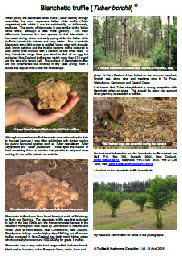
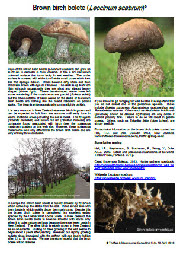
Progress in the cultivation of edible mycorrhizal mushrooms has been pedestrian since the Périgord black truffle was first cultivated in the first half of the 19th Century. However, over the past 30 years scientists have begun to unlock the secrets to growing some of the other 1000 plus aboveground edible mycorrhizal mushrooms and the wonderful array of flavours they have to offer. Some of these mushrooms have either accidentally found their way into the Southern Hemisphere or have been deliberately introduced.
The cultivation of the above ground edible mycorrhizal mushrooms could be done in specialised plantations like the truffles, as secondary crops in plantation forests or as part of reforestation programmes. The harvest and sale of mushrooms or truffles during the life of a forest would offset the cost of establishing the plantation. Under some circumstances, the income from the sale of the mushrooms and truffles may exceed the value of the timber. Even modest quantities of these mushrooms may generate sufficient income for a grower to delay felling a plantation until timber prices are optimal. In 1999 it was estimated that 300,000 tonnes of wild mushrooms were harvested each year in China. Of these about a half would have been mycorrhizal mushrooms. You can get some idea of the importance of wild mushrooms to some countries from the online FAO book by Eric Boa.
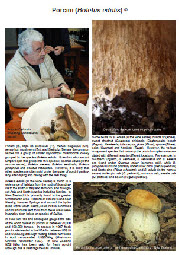
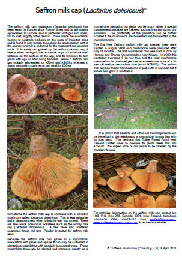
Each of the mycorrhizal mushrooms along with their host trees require a unique set of conditions to grow and fruit. The saffron milk cap only grows on acidic soils such as those suited to radiata pine (Pinus radiata). In New Zealand it has fruited from just north of Dunedin to Nelson in the South Island and as far north as Gisborne and the Waikato in the North Island. Because it grows widely in Scotland it is likely to grow in Southland. Another mushroom in great demand is porcini (Boletus edulis) which grows both on pines and broadleaf trees.
The cultivation of the above ground edible mycorrhizal mushrooms could be done in specialised plantations like the truffles, as secondary crops in plantation forests or as part of reforestation programmes. The harvest and sale of mushrooms or truffles during the life of a forest would offset the cost of establishing the plantation. Under some circumstances, the income from the sale of the mushrooms and truffles may exceed the value of the timber. Even modest quantities of these mushrooms may generate sufficient income for a grower to delay felling a plantation until timber prices are optimal. In 1999 it was estimated that 300,000 tonnes of wild mushrooms were harvested each year in China. Of these about a half would have been mycorrhizal mushrooms. You can get some idea of the importance of wild mushrooms to some countries from the online FAO book by Eric Boa.
Each of the mycorrhizal mushrooms along with their host trees require a unique set of conditions to grow and fruit. The saffron milk cap only grows on acidic soils such as those suited to radiata pine (Pinus radiata). In New Zealand it has fruited from just north of Dunedin to Nelson in the South Island and as far north as Gisborne and the Waikato in the North Island. Because it grows widely in Scotland it is likely to grow in Southland. Another mushroom in great demand is porcini (Boletus edulis) which grows both on pines and broadleaf trees.
Pamphlets on the cultivation of some Edible Mycorrhizal Mushrooms
Background info, Porcini, Saffron milk cap, Bianchetto truffle, Birch bolete, Painted bolete
Background info, Porcini, Saffron milk cap, Bianchetto truffle, Birch bolete, Painted bolete